 Pod Save America Hosts Call on Democrats to Cut All Israel Military Aid, No Longer Accept AIPAC Funding
 Jews, Israelis Targeted in Austria Amid Surge in Antisemitic Incidents; Local Jewish Community Calls for Action
 ‘All of Our Strength’: Over 1,000 Pro-Israel Activists Gather in DC for Solidarity Conference
 ‘Devastated’: Wesley LePatner, Killed in Manhattan Mass Shooting, Was a Jewish Communal, Philanthropic Leader
 Sen. Angus King Vows to No Longer Vote for Israel Military Aid Until Gaza Conditions Improve
 Europe Won’t Pressure Israel to ‘Commit Suicide’ Amid Gaza Backlash, Palestinian State Push, Says Israeli FM
 Israel’s National Soccer Coach Attacked in Athens Before Soccer Fans Chant ‘F–K Israel, Free Palestine’ at Match
 New York Judge Sentences Neo-Nazi to 5 Years for Livestreaming Bomb Threats Against Jewish Hospitals
 US Pressures Lebanon to Issue Cabinet Decision to Disarm Hezbollah Before Talks Continue
 UK Plans to Recognize Palestinian State in September Unless Israel Meets Conditions, Starmer Says


France Sees Progress in Iran Nuclear Talks, but Time Pressing
Error: Contact form not found.
 by Reuters and Algemeiner Staff

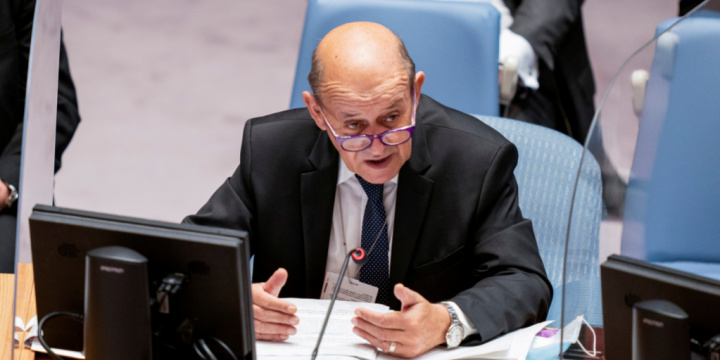
French Foreign Minister Jean-Yves Le Drian speaks during a meeting of the United Nations Security Council in New York, U.S. September 23, 2021. John Minchillo/Pool via REUTERS
Progress has been made regarding the Iran nuclear talks although time is running out, France’s foreign minister said on Friday.
Indirect talks between Iran and the United States on salvaging the 2015 Iran nuclear deal resumed on Monday.
Western diplomats have indicated they are hoping to have a breakthrough by the end of January or early February, but sharp differences remain with the toughest issues still unresolved. Iran has rejected any deadline imposed by Western powers.
“I remain convinced we can reach a deal. Bits of progress have been made in the last few days,” Jean-Yves Le Drian told BFM TV and RMC Radio. “We have been heading in a positive direction in the last few days, but time is of the essence, because if we don’t get an accord quickly there will be nothing to negotiate.”
The eighth round of talks, the first under Iran’s new hardline President Ebrahim Raisi, resumed on Monday after adding some new Iranian demands to a working text.
Another positive sign this week was the arrival in Vienna of South Korea’s Vice Foreign Minister to discuss with Iran, the United States and other parties the possible release of $7 billion of frozen Iranian assets held in the Asian country because of US sanctions.
Any release would need to be approved by Washington.
The ministry said in a statement that the vice minister had agreed with the Iranians that the release of the frozen assets “should take place in an urgent manner.”
“It will be discussed at the sanctions removal working groups in Vienna,” an Iranian official said, clarifying that the funds would not be released immediately.
Western powers have said progress was too slow and negotiators had “weeks not months” left before the 2015 deal becomes meaningless.
Iran refuses to meet directly with US officials, meaning that other parties — Britain, China, France, Germany and Russia, must shuttle between the two sides.
In an interview with Al Jazeera on Thursday, Iran’s Foreign Minister Hossein Amir-Abdollahian also suggested the situation was positive, but repeated Tehran’s position that all sanctions must be lifted and that Washington should provide guarantees that it will not pull out again.
Little remains of that deal, which lifted sanctions against Tehran in exchange for restrictions on its atomic activities. Then President Donald Trump pulled Washington out of it in 2018, re-imposing US sanctions, and Iran later breached many of the deal’s nuclear restrictions and kept pushing well beyond them.